Tuesday, December 14, 2021

Chipper 2 NTSB Final Report Lake Hood Accident N3748

In 2020, the NTSB released a final report on my 2018 accident in Alaska. Just about everybody missed this publication. The NTSB certainly makes no announcement of the publication of a routine GA report. It is buried within the Carol system, which is an accident database query system which the NTSB uses. If you know the details, you can find the report. 

Ironically, the NTSB identified my airplane, N3748, as a Pipper, not a Chipper. The story behind this is well worthy of another article and involves the first, forgotten name of Chipper, and a threatened lawsuit from Piper Aircraft causing the name change Pipper --> Chipper. But there you have it; technically N3748 was a Pipper, not a Chipper. Knowing that detail helps ease the discovery of the NTSB document.

Another piece of required reading is the earlier post,

Standard Pilot Blog: The Curious In-Flight Engine Failure of N3748 in Alabama (jameswiebe.blogspot.com)

...which details the catastrophic failure of the upgraded Rotax 912UL engine while returning from a successful Sun N Fun show in Florida. 

I will get to that NTSB report in due course, please keep reading.

After the failure in Alabama, N3748 was trucked to Wichita for repairs and additional upgrades to the Rotax. To my recollection, it received a different crankshaft, a new cam, and new pistons / cylinders from Edge Performance. An Edge Performance rep flew in from Canada to Wichita to perform the work.

After the work was performed, this forgotten video was made:

Chipper STOL Test Flight on Vimeo

And I left for Alaska. Along the way, some strange engine behavior was observed, causing me to pause the journey in Watson Lake, Yukon Territories for engine work.

Watson Lake is famous for its sign forest.

And I met another Chihuahua, which reminded me of my dog, Cocoa.


Yeah, I know that's not why you are reading this. Back to the point. With the help of the FBO, I explored why the engine was running rough sometimes. We looked at the carbs, because of some known issues with sinking floats. (This was not the problem, but we looked.)


And we looked at the chip detector. The crazy thing is that nobody seemed particularly alarmed.


After doing some things, the engine ground tested smooth running again, and I continued the flight to Alaska. For those of you that have flown the Alaska highway, been to Tok, seen 40 Mile Air, here's some memories.


Finally, arriving at Lake Hood (Anchorage) very late in the evening. It was a phenomenal experience. The dusk conditions, clouds and mountains made everything surreal.


Yeah, I'm still working towards that NTSB report.

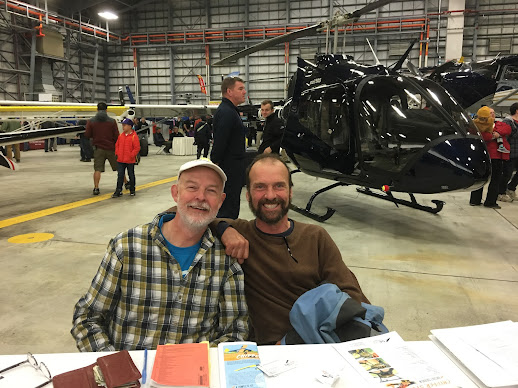
Over the course of the next couple of weeks, I gave demo rides, exhibited at the Alaska Airman show, met Steve Riedel in person and discovered that he was a pilot. 


(He and his daughter Emily are recurring characters in one of the Gold shows.)

While flying close to Anchorage, the engine started to run extremely rough. I consulted with a local mechanic and he indicated that conditions were prime for Carb ice. I agreed with the conclusion.

Later, the engine started to run rough again and I did a precautionary landing at a military base. After a few minutes on the ground, everything returned to normal, and N3748 went back to Lake Hood.

At that point, I fully involved a local mechanic in conjunction with tech support from Edge. They suspected a fuel flow issue, so we rebuilt the fuel lines. My fuel system included an electric pump which could force gas into the carbs. We had equipment for testing fuel pressure. At some point, my mind concluded that the engine was using gas faster than what could be supplied, so I repitched the prop for lower horsepower. Finally, the engine ran OK.

In hindsight, I do not believe the carbs on the 80HP engine were up to feeding gas to the cylinders at the 122HP rate of the upgrade. Perhaps I'm getting ahead of myself. My speculation as to why this didn't happen until I got to Alaska is easy to understand: it was the first time that the engine upgrade was flying close to sea level, along with cold temps, causing the density altitude to plummet, and the gas requirements to rise.

On the afternoon of May 23, after an extended and successful ground ops check of the engine, I taxied to the Lake Hade gravel airstrip, which is on the same extended area of Anchorage airport. The gravel strip and the adjoining lake support GA traffic for the thousands of small airplanes based in Anchorage. The control tower gave approval for takeoff, and I advised that I would be closed pattern.  I climbed out and made right traffic. Later that day, I was to head to Fairbanks and continue showing off Chipper.

Coming down final on this test run, everything was perfect. For reasons that are not clear, I decided to take a second trip around the racetrack, and I advised the tower of my intentions; they approved.  I was climbing out at about 150' AGL when the engine went to idle power and the aircraft started to descend. Looking forward, I saw my dilemma: insufficient runway remaining for landing.

I mic'd and called tower. I don't remember my exact words, but I do remember my tone of voice: urgency, urgency, trouble. "N3748 lost engine, landing."

The tower responds: "Cleared to land."

The next sequence is like a video game, where the great big obstacle is approaching you and you're trying to figure out what can stop certain calamity.  My mind is thinking slip, but it is hopeless. Suddenly, a solution emerges: touch down at the end of the runway, bounce like crazy, clear the 8' chain link fence, and land in the following bog.

It was a good plan, but it didn't work. I hit the end of the runway and bounced. The gear caught the chain link fence, N3748 stopped flying right then, the propeller spinner nose of N3748 hit the ground, all forward motion stopped in that exact moment, and the plane flipped over on its back.

I was upside down, suspended in my four point harness, looking at the swampy bog which the airplane was sitting in.


(This photo was taken a little later in the day, the wings have been cut away from the cabin.)

I could hear sirens in the distance.

I thought, "they are coming for me."

I reached down to the ground.  I could feel dampness, was that fuel?  Remember, I'm still upside down, in my harness.

I checked my body.  I felt pretty good.  Nothing broken.

I fumbled for my harness and I couldn't get it to release. The problem was my weight tension on the clasp. Forcing myself up by pushing on the roof of the cabin, the clasp popped and I dumped my body downward to the windshield; now to get out of the airplane.

The door and frame were distorted and I couldn't get the latch to pop. I put my legs into the problem and the door popped open. 

I climbed out of the cabin and onto the wing. Just as I got that accomplished, two men ran up to me.

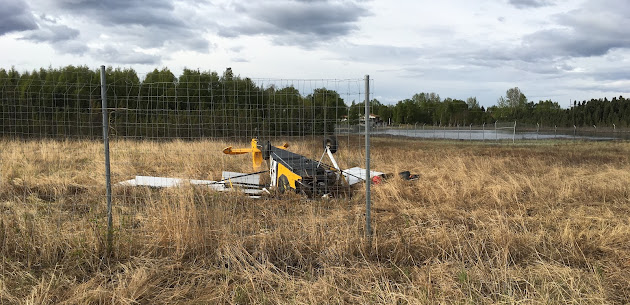
My resting spot was in a bog, over a fence, about 375 feet from the end of the runway. In the following photo, the fence was cut later to get access to the site.


You are seeing the plane in the exact spot where it hit the ground. Things stopped fairly quickly.

A lot of what happened from that point forward is very blurred.  Fire trucks, ambulance, a trip to the emergency room (what a waste of thousands of dollars), NTSB investigator, Uber driver taking me to a hotel, people contacting me with offers to help, Anchorage news, Facebook comments, call to my wife: "I've rolled the plane into a ball" which wasn't true, but expressed my state of mind, trying to find an immediate commercial flight home, all flights full, frequent flyer miles, a room in a hotel, talking with Kathy at 1:45am in the morning, pleading with American Airlines to find me a way home, finding a flight to Seattle that had a seat, getting AA to fly me on miles from Seattle to Wichita, getting home, having an interview with Mike Ross (Anchorage TV news) via Skype.

From the hospital ER:


That was where my knees hit the panel, which was most of my injuries.  I think I had a scratch on my head, probably from hitting the ceiling when I released the seat belt.

But there is that NTSB report.

from the report:

"Because the carburetors were not altered, it is likely that the engine was not receiving enough fuel for full power operation, which resulted in a total loss of engine power during the go-around attempt."

Here's another page from the report:


More curious stuff:

"All rocker arms exhibited discoloration consistent with high heat exposure."

"When the number 4 cylinder was removed, the valve was discovered fractured and a witness mark was present consistent with piston contact."


You can read the full text version of the NTSB report here:


I'm restarting Chipper + Ultralight work now. I dealt with this accident and then I dealt with a horrible fire. Would you be willing to help me? Then support me on Patreon:


Thanks for reading. -- James


Monday, November 29, 2021

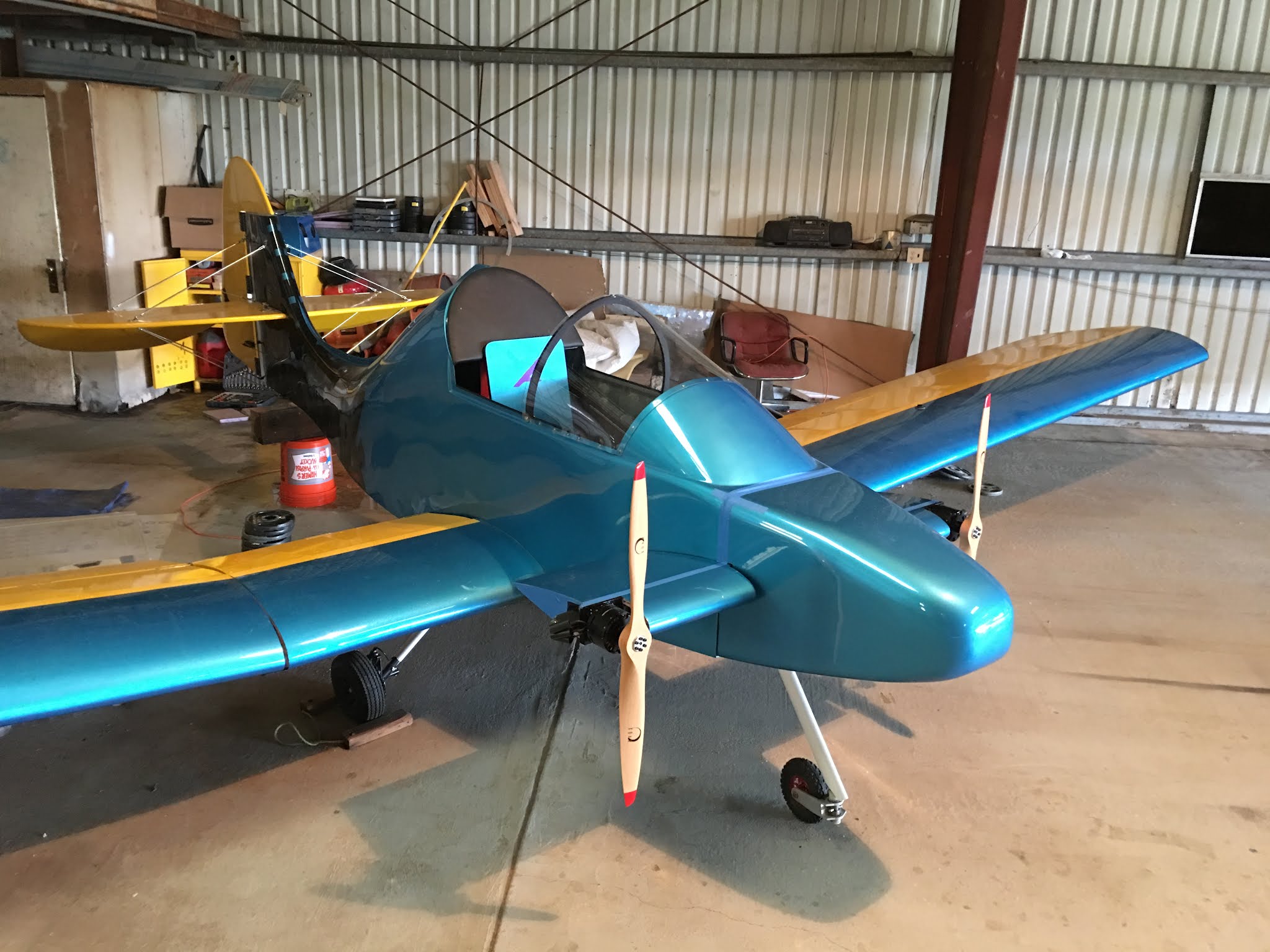
Wonder of Wonders (WoW) Amazing aircraft paint scheme!

 The Wonder of Wonders (WoW) Plane    

Ever had a great idea for an airplane paint scheme?

How about a scheme that's easy to do, distinctive, and inexpensive and unforgettable? You might think that's impossible. It's not.

The idea for the WoW paint scheme rose in my head. Why not paint a plane white and then cover it with a a variety of colored pre-cut vinyl circles?

And that is how WoW came to be.


I love the head on look of this plane.


It was fun to get it ready.


Wednesday, November 24, 2021

Improving strength in a landing gear bulkhead


I'm working on upgrading my landing gear bulkhead. Jumping right in, this is how things look after I've removed the broken parts.The leftover angles are still visible, but I removed them later. It was easy to remove the fuel lines on the right hand side, but the rudder cable was a stickier wicket. I ended up cutting it at the thimble, and will reuse the same line and install longer stainless straps to resolve the shortened cable.  Also in this photo, I've not yet removed the bottom aluminum. After everything else is done, I will re-sheet that section.

This is the left side of the work area. The 1/8" material remained bent. It had reached yield load but not ultimate. After consultation with CW, I concluded to leave it. The new angle was clamped and bonded into place, and the new top and bottom bolt holes are substantially to the left o the existing holes. The new middle bolt hole is centered between the old holes.


Right hand side with old angle finally removed.


Now, I drill out rivest and cut out the bottom skin. I should have done this earlier, it makes everything easier.


Seizing opportunity, I removed rust from the 1 3/8" steel tube. It will get blued or painted. I also discovered that the AN3 bolt holding on the bushing was over-tightened, which made the oilite bearing not work smoothly, thus diagnosing a minor background squawk.


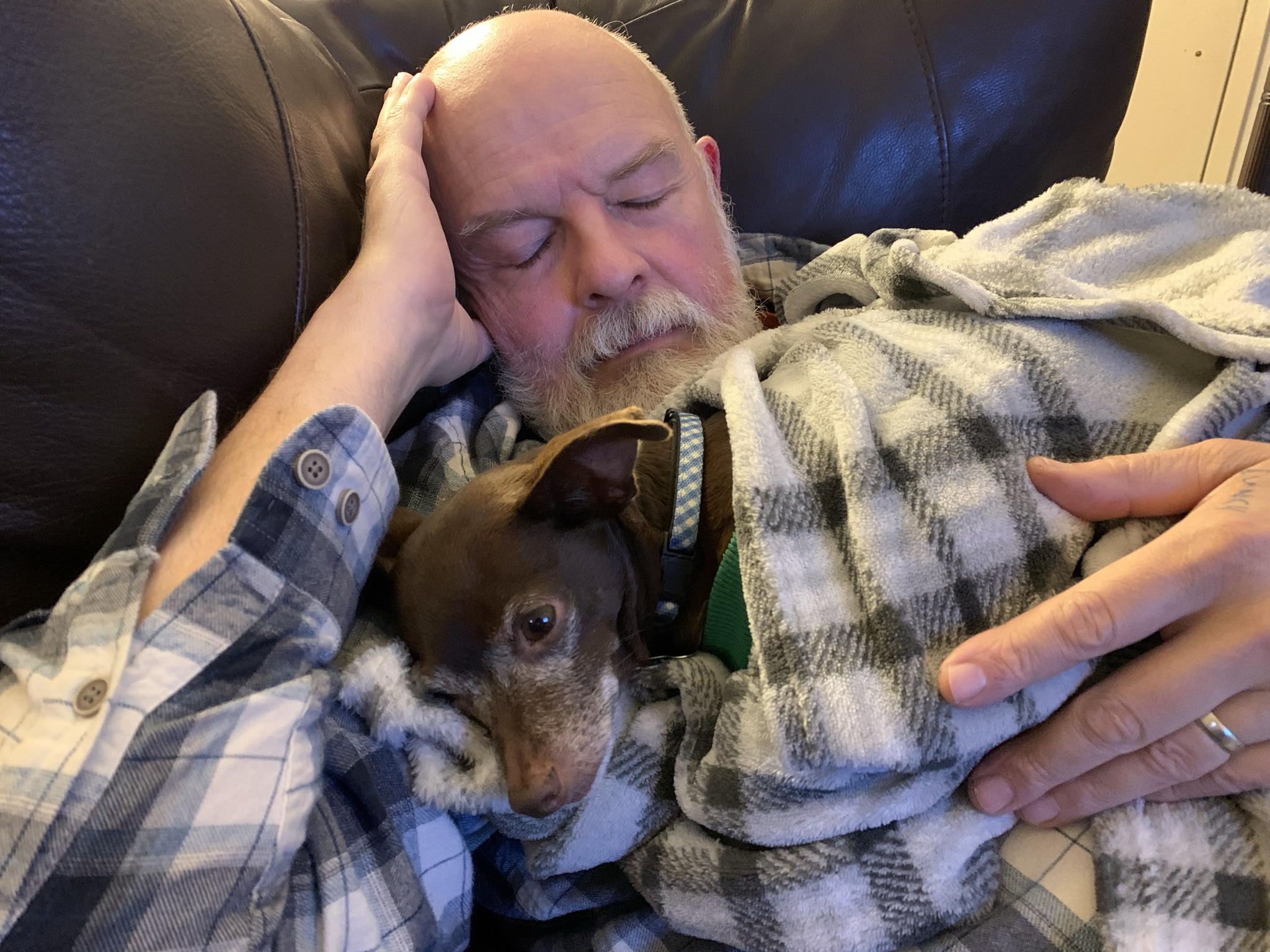
Cocoa cuddle break.


Unused rivet holes are filled with epoxy. This restores the integrity of the HC. Do the same with unused bolt holes.


It would be better NOT to drill out the outer skin, but I did. Use something (for instance, a very small allen wrench) on an electric drill to clear out ALL of the honeycomb for an area equal to or greater than a fender washer. Pot all holes with high tensile epoxy compatible with aluminum. JB Weld original formula; 3M 2216 are good choices. I did it when the hangar was very cold so it made it easy to do with masking tape and no dripping.  YMMV.  My glue wasn't runny.  It was glop.

This is new required procedure for all bolts going thru HC. 


Same thing from the inside. You can see the epoxy which has oozed through the drill holes.


The top angle is bonded into position, as the are the left and right side attach angles. All surfaces between bulkheads and angles need to be heavily roughed (grinder or 60 grit), cleaned, attached using appropriate metal bonding epoxy.


Here's the left angle, which was machined to fit, partially bolted in place.  The red wire is power going to the flap and droop linear servos. Not all bolts are done.  The lower angle (which is impossible to see) is not yet in place.


The right angle bonded and partially bolted in place.


To be continued....


Tuesday, November 23, 2021

How to make a plug for Composite Amphibious Floats

Ever wanted to fly on water?

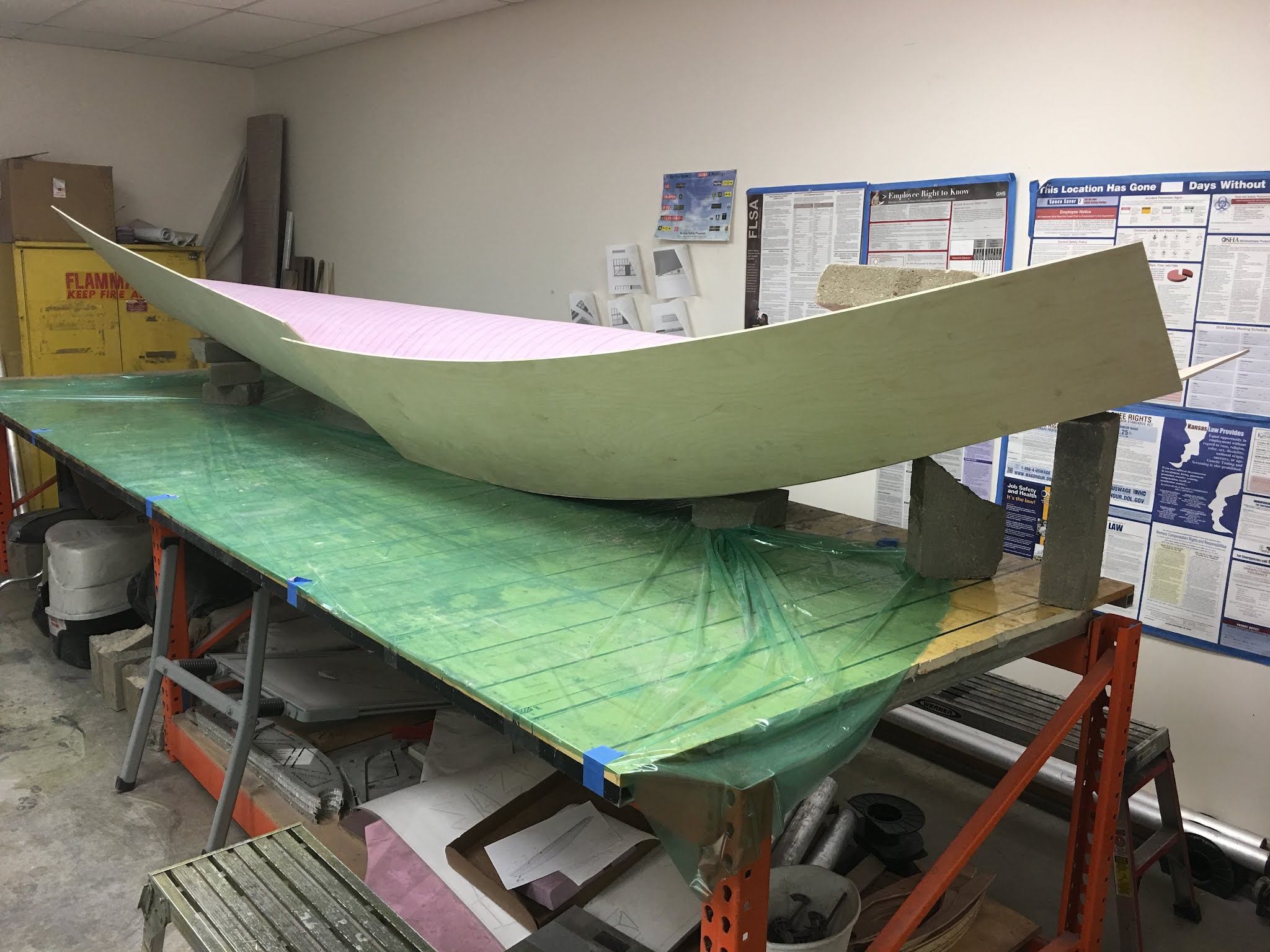
First of all, this is a work-in-process.  The plug is not yet complete. In fact, as I write this, it is in storage, ready for next steps. That next step would be to finish the plug, and then use it to either make a mold or start making parts.

Secondly, this is just a pictorial journey.  

As a brief overview, I created a design for a float in CAD, then exported into slice files for cutting in foam. They were stacked and shaped, then glued to a plywood bottom base. Fiberglass was applied for strengthening, also some aluminum rails.

And that is where the project sits now. It's in storage.  :-/


Monday, November 22, 2021

Breaking the Landing Gear Bulkhead on my Chipper 2

Stupid Pilot Tricks...

I had just installed the new oil thermostat in my Chipper 2.  I pulled the plane out of the hangar, eager for a break in the routine.  (I was early in the process of installing shock absorbers on the plane.) It was a beautiful afternoon, the sky was blue, the grass was green, and the plane was gorgeous.  

Chipper 2 N318KW stock photo, before recent events.

As usual, my UL350iS powered up without a hitch. My goal was simply to warm up the engine and check oil pressure & temps. The process of warming up was taking a long time (it was a little chilly) and I advanced power while keeping the brakes engaged.  This went on for several minutes. I edged the power up a bit more. My brakes were having a hard time keeping the plane from creeping forward. I'd ease back on the power, hold the brakes a little tighter, and advance power again.

All of this was extremely poorly thought out.

After advancing power again, the plane started to list to the left and settle down to the ground, like it was kneeling. Realizing that a prop strike was imminent, I retarded throttle. The tip of the prop cut into the soft grass and dirt, carrying through several blades before all became silent.

I broke my plane.

I did not take a picture. I was flaming mad. My hangar mates swiftly emerged from a hangar backroom, having heard the commotion, and walked towards me as I got out of the kneeling airplane and looked at one gear leg bent backwards. I realized that I had twisted the gear attach bulkhead. (The gear leg was not hurt.)

Then I realized I had forgotten to re-install the trailing links, so I had just ripped my gear out because of my forgetfulness.

With the help of my friends, we rolled the wounded bird back into the hangar. 

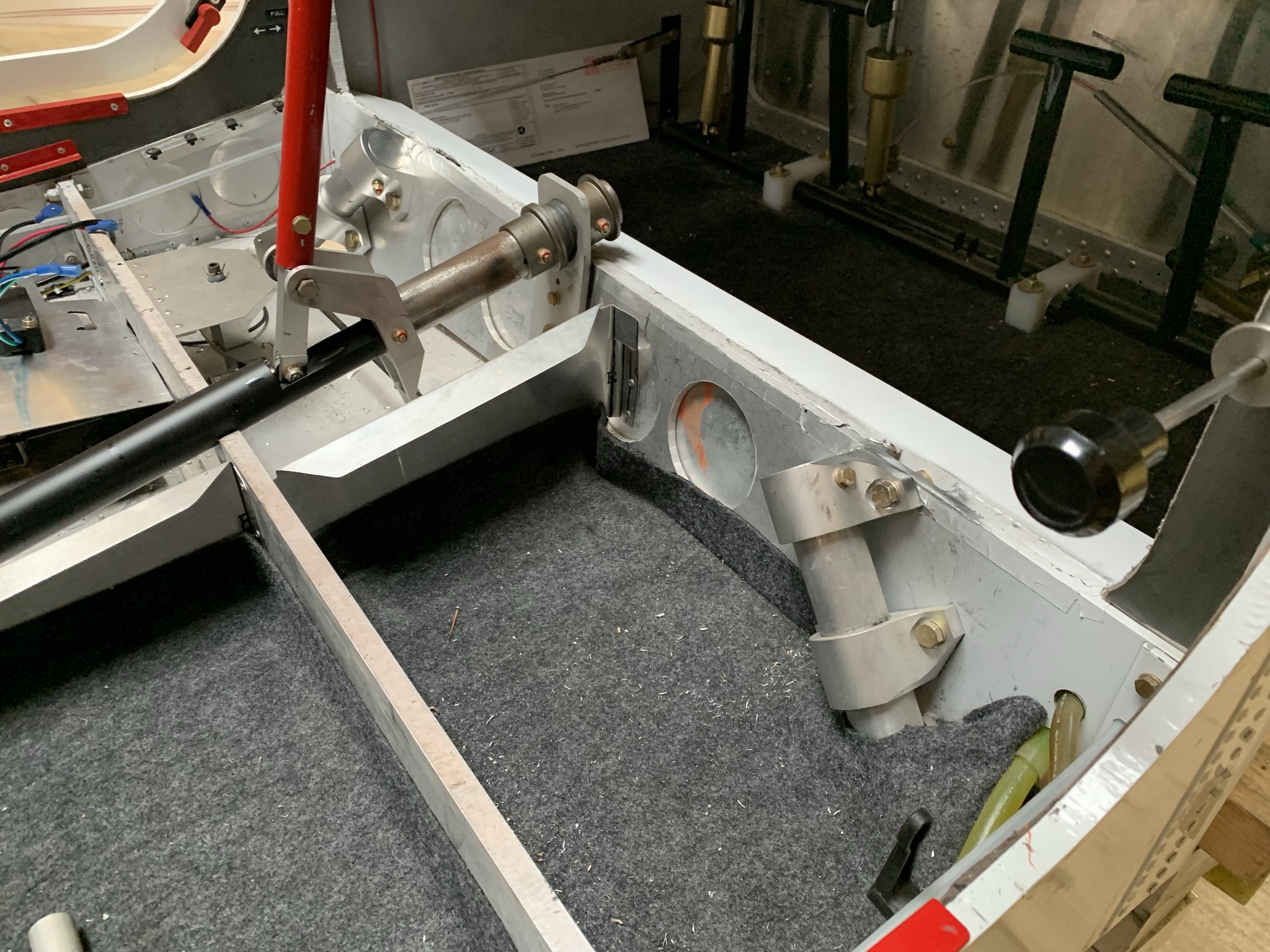
The inside of the cockpit looked like this:

And after several days of drilling out rivets, chopping out aluminum bulkhead, and cutting / pulling / fussing / fuming, the removed bits looked like this:

Over the course of the Thanksgiving holiday, I will be stepping you through what I have learned on how to repair this problem in my Chipper. I have also been using this opportunity to solve some other problems.

1) Improved bulkhead assembly for potentially higher gross weight

2) Shock absorber installation for potentially higher gross weight

3) Improvements in mounting techniques for bolts in honeycomb

4) Improvements in bonding techniques

5) General proof that this structure is repairable

And as I head into the Thanksgiving break, things are much improved. Here's a photo of how things were looking earlier this afternoon.


I do all my airplane stuff at 29KS, which is the Wichita Gliderport. It has many very smart aviation people who hangar there and build / rebuild / repair things there.

The benefit of this unfortunate event is that I am receiving honeycomb repair and assembly advice from another of these hangar mates. 

I'm going to take a moment out to brag on some of my aviation friends:

    N.: ex-CTO of Mooney Aircraft
    CW.: A&P/IA, formerly with Textron, traveled the globe fixing King Airs, versed in everything including honeycomb
    D.: A&P/IA, formerly built parts for Mosquito Helicopters, currently starting a Piper Cub parts company, currently rebuilding 3 Cubs, has built 7 Pietenpols lifetime to date, with the last one nearly done right now
    CP: 50 years with Cessna engineering, knows everything about any piston aircraft they designed. He can tell you why various Skylanes had weight changes, cabin changes, structure changes, feature changes. He is the walking and talking encylopedia of Cessna singles. 
    K: Designed composite propellers for McCauley, currently working for Textron special ops.
 
In particular CW has taken an interest in Chipper 2 and its proper repair. 

Bottom line: after this rebuild, I believe that the gear mounting bulkhead will be strong enough so that failure will not occur when the trailing link is not installed.

Thanks for reading. Please "Follow" this blog by clicking on the Follow button.  You'll be advised every time I post the next article.

Live & Learn.


Friday, October 29, 2021

Is Now the Time for Electric Ultralights?

 The biggest use of ultralight aircraft is to enjoy flight. To that end, is now the right time for an electric ultralight aircraft? I've been there and done that and want to share my history with you.

My History with Electric Ultralights

I've designed and flown electric aircraft. I threw a lot of money into this one, which featured a carbon fiber fuselage and wing. It is called "SkyDock". I developed it with a gas engine as well.

Electric Ultralight Aircraft

Electric Ultralight in flight

A couple of years before that, I adapted an electric motor to a classic Belite ultralight.

UltraCub ultralight with electric motor

UltraCub Electric Aircraft in flight

To help answer the question:
  1. Ultralights are flown for fun; and electric flight is super fun!
  2. Electric motors are available with incredible value and excellent power;
  3. The best batteries ever are now available;
  4. U.S. ultralight law allows individuals to do this experimentation easily;
  5. Even a company or two (eg: Chip Erwin and Merlin) are publicly showing their work with electric ultralights.
Electric Installations:

Consider a single vs dual motor installation. The SkyDock was setup with two motors, while I flew the Belite with one motor. One of my customers used a very interesting single motor design for his converted UltraCub.

Electric Motor on UltraCub Ultralight

Electric Motor on Ultralight Aircraft

SkyDock with dual Electric Motors

Want to see the electric motors on Skydock doing their thing?:


And even more details of how the Skydock Electric motor installation was designed:

Electric Motor Installation in Skydock

Electric motor in Skydock

Electric motor development for ultralight

Is Now the Time for Electric Ultralights?

Yes, it is.
  • Electric flight in ultralights is proven by myself and others.
  • Batteries can produce acceptable flight times for ultralight aviation.
  • FAR 103 and Experimental rules allow it.
  • Bonus: Electric motors are less expensive than gas motors. (Although offset by battery acquisition costs.)
  • Electric flight has a unique sound signature, better and different than any gas motor.  It's just the prop and the airframe, no combustion sounds!
For further exploration:

I recommend you join this Facebook group, run by Bill Esker:


Thursday, October 28, 2021

The Curious In-Flight Engine Failure of N3748 in Alabama

I was flying N3748, the very first Chipper 2, and I was in cruise, home-bound from a successful Sun-N-Fun in a stiff headwind. One moment, a very choppy but normal aircraft experience. The exact next moment, the propeller was dead-still, and had come to that dead-still position in just one or two revolutions of the crankshaft. It was the kind of violent engine stoppage that screams that all is not well, and that your 'full and undivided' attention needs to be on resolving the emergency of the moment. I looked down, as I scanned the area for a place for an immediate dead stick emergency landing.

I took some critique recently for editing and posting a YouTube video which was described as click-bait. This article is not that; I will tell you exactly what happened, how I responded, and what we found in the engine. I have witnesses who were there, and I have photos of the aftermath of the engine. I won't belabor this story; I've kept this as a short and easy read.

Sun-N-Fun, 2018

But the first order of business for this curious tale is to backup just a few days, to Sun-N-Fun, 2018. I was there with Chipper 2, and it was a success story. Chipper 2 N3748 performed without flaw, showing outstanding takeoff and landing capabilities.


Chipper 2 at Sun-N-Fun

To my delight, it even got the cover of General Aviation News. Describing the airplane as "Chipper in Paradise", it helped fuel good PR, sales, and momentum for Chipper Aerospace, my company.

Chipper in Paradise

Engine Changes

Chipper had started out as a two place aircraft project. I originally saw it as an airframe powered by a 60HP engine. To that end, I'd purchased a used Japanese HKS 700e engine, installed it on the plane, and discovered that the engine needed an overhaul. So Chipper never flew with 60HP.

After much consideration, I purchased a new Rotax 912UL, an 80HP engine, brand and spanking new. Everyone who flew it loved it. It did not disappoint at 80HP, and was bucking the trend that light sport aircraft needed to have 100HP engines. Hogwash; I showed them otherwise and proved it.

Yet there was that lust for power, for an improvement in ground roll, for an increased angle of climb. Without changing to yet another engine, the only way I could squeeze more performance out of my Rotax was to upgrade it using an aftermarket kit. When the engine had about 150 hours of use on it, I decided to purchase an engine upgrade from Edge Performance. 

The kit was ordered and received. It was principally installed by a local A&P mechanic. I never touched anything; I'm not an engine guy.

The upgraded engine on N3748 was what I took and showed in Florida.

And its performance was fairly phenomenal. Here's video proof, which I took in-cockpit while taking off in front of a crowd at Sun-N-Fun:

The Flight Home

This is what I remember about the flight home. First of all, the wind, blowing on the nose of the airplane, making every effort to slow my progress.  I tried low altitudes. That increased airspeed, at the expense of bitter, angry jostling of the airframe. I tried high altitudes. A smoother ride, at the expense of speed. For a long while, I was just a few hundred feet off the Alabama forests, with no landing options but with faster speeds. For whatever reason, before I reached Evergreen, Alabama, I climbed up several thousand feet.

When it Gets Real

While in cruise at approximately 4000' altitude, I experienced a sudden and complete loss of power of N3748. One moment all was well, and the next moment, the propeller was fully stopped. My body told me that a restart was not possible due to the shaking experienced while it shut down. Perhaps I touched the starter; perhaps I checked fuel.  I am not certain and I knew it didn't matter. The engine had failed.

I had been traveling over endless miles of forest, with low or non-existent options for emergency landings. I knew I had been playing my odds wrong (I'm always looking for emergency locations.)

This time, I looked straight down, and I realized that I was over the midpoint of the east-west runway of KGZH, Evergreen Regional Airport (AKA Middleton Field). Having already established glide, I made a left turn to reverse course and establish a dead-stick pattern downwind. I looked up the frequency for the airport, and quickly dialed into my radio.

I said: "Evergreen, are you there?"

An angel said back: "This is Evergreen Regional, I read you."

I said: "Evergreen, I am dead-stick overhead your airport now, landing. Can you observe my landing?" I don't remember using the emergency word, but I know that my language conveyed emergency, urgency, and fear, all in one.

The angel said: "Wilco, I'll hop in the truck and see you on the ground."

I think I got all that done while on downwind. A little voice in my hide was nagging me on the irony of dead-sticking into a huge paved airport, and then ending up short on final. That would be an insult wrapped in a tragedy inside of an emergency. I didn't want that to happen.

Adjusting glide, I added flaps and also added a little droop aileron. I listened to the electric linear motors driving the flaps and droop mechanism. I listened to the air flowing around the aircraft.

I turned base.

I turned final.

I passed over the threshold, probably 100+ feet off the ground.

I touched down. It was a pretty good landing. I was one-third down the runway, with a thousand feet behind me and two or three thousand ahead of me.

I rolled to a stop, and off to my right the Angel drove up in a pickup truck.

Tears / crying, but I was alive and unhurt.

Engine Teardown

Let's cut straight to the cause: the engine failure was caused by a failure of and/or improper installation of a clip. The engine had clearly been operating for some time with the failed condition.

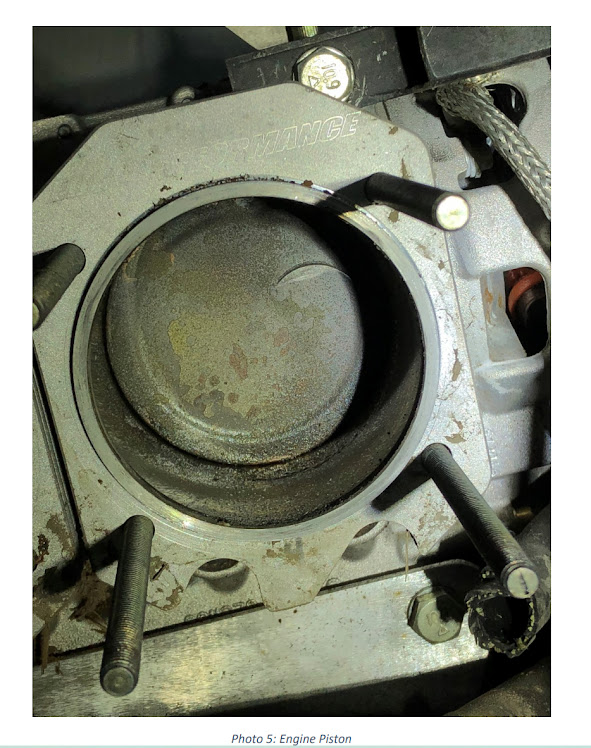
Failed Piston in upgraded Rotax

Failed Rotax Cylinder with upgrade

Spark plugs in failed upgraded Rotax

Failed Crankcase and Connecting Rod


Aftermath

After the teardown, the plane was loaded into a rental truck, and I drove it home. It eventually was repaired and received a couple more upgrades, before I flew it to Alaska, and it was destroyed after another engine failure. (Another story for another time.)

Curious Questions

1) Why did the engine fail when I was mid-field over an airport?

2) Why did I upgrade the engine in the first place?

3) What could have been done to prevent this from happening?

The Angel

The airport manager was a wonderful woman, whose name was Terri. She was emotionally and resource-wise helpful to me and spared no effort to make my stay in Evergreen comfortable. I got the use of the airport car, of course. :-)


Tuesday, October 26, 2021

 Friends, there's some honesty buried in here as it relates to experimental aircraft. Read it all and share freely.

Squawk & Resolutions on N318KW
  1. Brake Pedals in-op. Resolution: add 1" spacer to brake pedal. Permanent solution; works well.
  2. One of the tires is low on air. Resolution: add air.
  3. Right brake in-op. Resolution: bleed brakes.
  4. Right brake still in-op, next day. Resolution: bleed brakes using the correct procedure after reviewing youtube video on the topic.
  5. Brake line leaks: Resolution: tighten fittings.
  6. Braking action still poor: Resolution: brake fluid probably on brake pads / discs. Use brakes to refinish pads. Braking action now OK. Note: I have dual caliper brakes and they are mandatory for large tires. A single caliper brake wouldn't work.
  7. Elevator range of motion incorrect. Resolution: adjust all fittings so that up and down are balanced. There are several points of adjustment affecting this from the push-pull fittings, the location of the push-pull collars, inside-cabin adjustments, etc.
  8. One of the tires is low on air. Resolution: add air.
  9. Discovered critical bolt installed upside down in elevator reverser fitting. Bolt also was loose with standard hex nut. Loss of bolt would cause loss of control. Resolution: install bolt correctly, with nyLoc nut. Death averted. Question: how did everyone miss this?
  10. On first flight, aircraft rolls left tendency. Resolution: adjust stick position via pushrod to aileron mixer.
  11. On first flight, aircraft has heavy elevator response. Resolution: add fixed trim tabs to elevator. Final resolution: in-flight adjustable elevator trim tab.
  12. In cruise, aircraft yaws left. Resolution: add trim tab to left aileron.
  13. On takeoff, quick application of full power causes aircraft to turn left REALLY QUICKLY. Resolutions: a) improve pilot skill b) don't do that c) resolve to use less powerful engine d) use full!!!!! right rudder. In the spirit of Draco, for crying out loud, your skill level needs to match the airplane and the powerplant. You can't jump into this airplane and expect it to fly you. You will have to fly it while taking off and even in ground roll, or you'll have an accident.
  14. Long main gear is chattering. Potential resolutions: add shock absorbers, and yes, I am planning to do this. Meanwhile, every landing is best performed to 3 point and full stall. Don't even consider a wheel landing. I will follow up with a builder alert after I install shock absorbers.
  15. Oil leak as evidenced by small puddle on floor of hangar. Resolution: temperature sensor was installed without teflon tape.
  16. Oil leak as evidenced by even smaller puddle on floor of hangar. Resolution: pressure sensor was installed without teflon tape.
  17. Airspeed Indicator possibly not functional at low airspeeds, due to high angle of attack. Resolution: smile and enjoy the slow airspeeds. Learn how to fly using butt feedback, not instrument feedback. This airplane will love you, if you give it the chance.
  18. Yaw oscillation in cruise. This happens only when: a) cruise speed b) feet not on rudder pedals c) turbulence. The plane will *slowly* start to yaw left and then right, kind of like an old fashioned v-tail bonanza. Resolution: a) keep feet on rudder pedals -or- b) add rudder tension spring. You may notice that in yesterday's video posted here, there was no evidence of this. Seriously, the rudder tension spring is the solution.
  19. Pitch oscillation in turbulence. This never happened in N3748, but I have seen some evidence here in N318KW. The reason is simple: the elevator on this plane is heavier, so that a gust acceleration upward causes the mass of the elevator to go downward. This is a precursor to flutter. Resolution: I will adding mass balance weights to the elevator. I will follow up with a builder alert on Chipper Builder.
  20. Out of an abundance of caution, I am planning to add vertical stabilizer flying wires, which N3748 had but N318KW does not. Resolution: add flying wires. I will follow up with a builder alert on Chipper Builder.
  21. Windshield cracked. Resolution: performed airworthy windshield repair. Longer term resolution: under thought now.
  22. One of the tires is low on air. Resolution: add air.
  23. Tailwheel steering in-op. Everything you see me doing to date has been done without any tailwheel steering whatsoever. I've gotten OK learning to feel the airplane, rudder, brakes, power and to taxi with confidence, without a steerable tailwheel. Resolution: need to install tailwheel steering.?!